Learn how to track freelance income and expenses without an accountant. A simple system for 1099 workers to stay organized and tax-ready all year.
How to Track Freelance Income and Expenses (Without an Accountant)
Knowing how to track freelance income and expenses is the single most important financial habit a 1099 worker can build. Miss it, and you will overpay on taxes, lose deductions, and hand your CPA a shoebox of receipts every April. Do it right, and you will always know exactly where your business stands.
Key Takeaways
- Freelancers who track income and expenses throughout the year reduce their average tax preparation time by 50% or more compared to those who reconstruct records at year end.
- The IRS requires self-employed workers to pay a 15.3% self-employment tax on net earnings, making accurate expense tracking directly tied to how much you owe.
- A separate business checking account is the single most effective tool for keeping freelance finances clean, and most can be opened for $0 to $25.
- Home office deductions are one of the most commonly missed write-offs for freelancers. The simplified method allows $5 per square foot, up to 300 square feet, for a maximum deduction of $1,500.
- Freelancers earning more than $400 in net self-employment income per year are required to file a Schedule C with their federal return.
Why Most Freelancers Fall Behind on Their Finances
The problem is not laziness. Most freelancers fall behind because they have no system, not because they lack discipline.
When income comes from three different clients, paid via PayPal, direct deposit, and check, it is easy to lose track. When expenses are scattered across a personal credit card, a business Venmo account, and a few cash receipts stuffed in a drawer, tax time becomes a forensic exercise.
The fix is a repeatable process that takes less than 30 minutes a week.
Step 1: Separate Business From Personal Finances Immediately
Open a dedicated business checking account before you do anything else. This one step eliminates 80% of the confusion that freelancers face at year end.
Every client payment goes into that account. Every business expense comes out of it. When you need to review your financials, you look at one account instead of combing through 12 months of personal bank statements.
What Kind of Account Do You Need?
You do not need a formal business account with a monthly fee. Many freelancers use a free checking account at a credit union or an online bank like Relay or Bluevine. The key is that the account is used exclusively for business.
Pair it with a dedicated business credit card if you want to maximize rewards on software subscriptions, travel, and client meals. Just make sure the statement reflects only business charges.
Step 2: Know Exactly What to Track as a Freelancer
Tracking freelance income and expenses requires two separate categories: money coming in and money going out. Both matter equally when you file a Schedule C.
Income to Track
Record every payment you receive, the date it arrived, which client paid it, what project it was for, and the payment method. This matters because the IRS taxes you on income received, not invoiced.
Here is why that matters in practice. If you invoiced a client $3,000 in December but they paid you in January, that $3,000 counts as income in January for a cash-basis taxpayer. Getting the dates wrong can create a tax liability in the wrong year.
Expenses to Track
The IRS allows deductions for ordinary and necessary business expenses. Common deductions for freelancers include:
- Software subscriptions (Adobe, Slack, Zoom, project management tools)
- Home office costs (either the simplified $5 per square foot method or actual expenses)
- Professional development and courses
- Equipment and supplies used for client work
- Health insurance premiums (if you are self-employed and not covered through a spouse)
Keep a record of the date, amount, vendor, and business purpose for every expense. The business purpose note is critical if you are ever audited.
Step 3: Build a Simple Tracking System
You do not need accounting software to get organized. A well-structured spreadsheet works for most freelancers earning under $150,000 per year.
The Core Spreadsheet Layout
Your income tracker needs five columns: date received, client name, project description, invoice number, and amount.
Your expense tracker needs five columns: date paid, vendor, category, business purpose, and amount.
Run both trackers in the same workbook with separate tabs. Update it every Friday. The whole process takes about 20 minutes once you make it a habit.
A Real-World Example
Consider Maya Chen, a freelance UX designer based in Austin, Texas. In her first full year freelancing, Maya earned $87,400 across six clients. She kept no records until November, then spent 40 hours reconstructing her income and expenses in time for a December CPA meeting.
She had missed $6,200 in legitimate deductions, including a $1,200 iPad she bought for client presentations, $840 in software subscriptions, and 11 months of home office deductions worth roughly $1,375. At her effective tax rate, those missed deductions cost her approximately $1,900 in overpaid taxes.
The following year, Maya spent 20 minutes every Friday updating a single spreadsheet. Her CPA meeting took 45 minutes instead of four hours.
Step 4: Track Client Invoices Separately From Income
An invoice is a request for payment. Received income is the actual money in your account. Conflating the two is a common and costly mistake.
Maintain a running invoice log that shows every invoice you have sent, the amount, the due date, and whether it has been paid. This gives you three pieces of critical information at a glance: how much you have earned, how much is outstanding, and which clients are consistently late.
Why Aging Receivables Matter
If you have $12,000 in unpaid invoices and one client is 60 days past due, that affects your cash flow immediately and your tax planning over time. Knowing this in real time allows you to follow up faster and avoid cash crunches.
A freelancer with no invoice tracking often finds out a client is 90 days late only when they reconcile their books for taxes. By then, the damage to cash flow has already happened.
Step 5: Prepare a Year-End Summary for Your CPA
If you do work with a CPA, or plan to, the most valuable thing you can give them is clean, organized data. Accountants charge by time. The more organized your records, the lower your bill.
What to Hand Your CPA at Year End
Prepare a summary that includes your total gross income for the year, a categorized expense total by type (software, travel, equipment, home office), all 1099-NEC forms received from clients who paid you more than $600, and your invoice log showing any outstanding receivables.
If you made quarterly estimated tax payments, include those amounts and payment dates as well. The IRS requires most self-employed workers to pay estimated taxes four times per year. Missing those payments results in a penalty, typically 0.5% per month on the unpaid amount.
The Quarterly Estimated Tax Reminder
Set calendar reminders for the four estimated tax deadlines: April 15, June 15, September 15, and January 15 of the following year. A common rule of thumb is to set aside 25% to 30% of every payment you receive into a separate savings account. Transfer it the same day the payment arrives.
How to Track Freelance Income and Expenses With a Template
A blank spreadsheet requires you to build structure from scratch every year. A purpose-built template eliminates that work entirely.
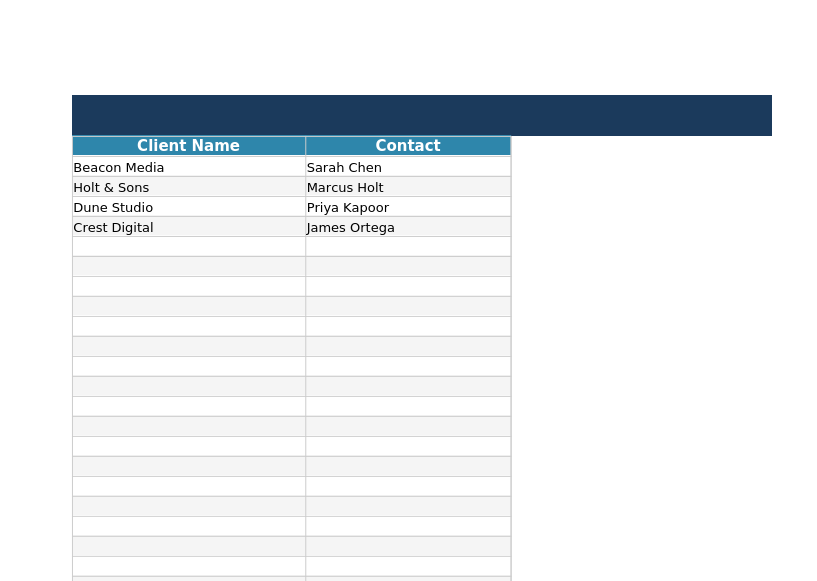
The Freelancer Client and Invoice Tracker from Small Business Finance HQ was built specifically for 1099 workers who want clean records without accounting software. It includes a pre-formatted income log, an expense tracker with built-in categories aligned to Schedule C, an invoice aging summary, and a year-end totals dashboard you can hand directly to your CPA.
It is available for $12 at smallbizfinancehq.com/templates. If you spend two minutes more than that on formatting a spreadsheet this year, you have already lost the trade-off.
Common Mistakes Freelancers Make When Tracking Finances
Understanding the right process also means knowing the wrong ones. Three mistakes come up consistently among 1099 workers.
The first is mixing personal and business expenses on the same card. This creates hours of sorting at year end and raises questions during an audit.
The second is recording income when invoiced rather than when received. For cash-basis taxpayers, the IRS taxes you on what actually landed in your account.
The third is ignoring small expenses. A $15 stock photo subscription and a $29 grammar tool feel too small to track. Over 12 months, those small subscriptions often total $800 or more, and every dollar is a legitimate deduction.
What the Template Looks Like
Here is a preview of the Freelancer Client & Invoice Tracker with sample data filled in:
The Bottom Line
Tracking freelance income and expenses does not require a degree in accounting or expensive software. It requires a separate bank account, a consistent weekly habit, and a clear record of what came in and what went out. Freelancers who build this system in year one save hundreds of dollars in CPA fees and thousands in recovered deductions in every year that follows. Start simple, stay consistent, and your tax season will become a routine task instead of a financial reckoning.