Learn how accounts receivable management helps small businesses get paid faster, reduce bad debt, and protect cash flow with proven systems and tools.
Accounts Receivable Management: How to Get Paid on Time, Every Time
Accounts receivable management is one of the most underdiscussed levers in small business finance. Most owners focus on sales and expenses, but the gap between money earned and money collected is where cash flow quietly falls apart. According to a 2023 QuickBooks survey, 89% of small businesses reported dealing with late payments, with the average outstanding invoice sitting unpaid for 28 days past due.
If you are invoicing clients and waiting, you are essentially offering them an interest-free loan.
Key Takeaways
- Businesses that follow up on overdue invoices within 48 hours collect payment 60% faster than those who wait a week or longer.
- Invoices aged over 90 days have a collection rate of roughly 69%, meaning you may never recover about 31 cents of every dollar owed after three months.
- The average small business writes off 1.5% to 4% of annual revenue as bad debt, an amount that compounds painfully over years.
- Setting net-30 payment terms is standard, but offering a 2% discount for payment within 10 days (called 2/10 net 30) can accelerate cash inflow significantly.
- Businesses with a documented accounts receivable process collect invoices an average of 10 days faster than those managing collections informally.
Why Accounts Receivable Management Matters More Than Most Owners Think
Revenue is not cash. That distinction sounds obvious, but it is the source of one of the most common financial surprises in small business ownership.
Consider a consulting firm that closes $80,000 in contracts during Q1. If $35,000 of that sits in unpaid invoices at the end of March, the owner cannot pay subcontractors, cover payroll, or reinvest in the business, regardless of how healthy the income statement looks. The business is profitable on paper and struggling in reality.
Here is why that matters: poor accounts receivable management does not just slow down cash flow. It forces businesses to cover operating costs with credit cards or short-term loans, which introduces interest expense that quietly erodes profit margins.
The Real Cost of Slow Collections
Late payments carry a price tag that most small business owners never calculate directly.
Direct Cost: Interest and Financing
When clients take 60 or 90 days to pay, many businesses turn to lines of credit to bridge the gap. A $20,000 outstanding invoice sitting unpaid for 60 extra days, financed at a 9% annual rate on a credit line, costs about $296 in interest alone. Multiply that across a handful of clients and a full year, and you are looking at thousands of dollars in avoidable financing costs.
Indirect Cost: Owner Time
The average small business owner spends between 3 and 5 hours per week chasing late payments, according to data from Xero. At a billable rate of $100 per hour, that is $300 to $500 per week, or up to $26,000 per year in productive time lost to collections work.
Hidden Cost: Damaged Relationships Done Wrong
Paradoxically, businesses that avoid following up on late invoices because they fear awkward conversations often do more damage to client relationships. Resentment builds quietly. The professional approach, with a clear, consistent system, actually preserves relationships better than avoidance does.
Understanding Aging Buckets in Accounts Receivable Management
Aging buckets are the backbone of any structured accounts receivable management system. An aging report categorizes your outstanding invoices by how long they have been unpaid, typically broken into these time ranges: current (not yet due), 1 to 30 days past due, 31 to 60 days past due, 61 to 90 days past due, and over 90 days past due.
Each bucket represents a different level of urgency and a different expected collection rate.
How to Read Your Aging Report
A healthy receivables portfolio keeps the vast majority of balances in the current or 1 to 30-day bucket. When you start seeing significant balances in the 61 to 90-day range, that is a warning sign that your follow-up process has gaps.
Here is a real-world scenario to make this concrete. Lighthouse Creative, a small brand design studio run by owner Maya Torres, carried $72,000 in total receivables at the end of October. When her bookkeeper ran an aging report, the breakdown looked like this:
- Current: $28,000
- 1 to 30 days past due: $19,000
- 31 to 60 days past due: $14,000
- 61 to 90 days past due: $8,000
- Over 90 days past due: $3,000
On the surface, $72,000 in receivables sounded strong. But $11,000 of it was at serious risk of non-collection, and the studio had not made a single follow-up call on any of it. After implementing a structured follow-up schedule over the next 90 days, Maya recovered $8,400 of that at-risk balance, writing off only $2,600.
Why Invoices Age in the First Place
Invoices age for several reasons: clients dispute line items, approvals get stuck in bureaucratic chains, contacts change, or the vendor simply never followed up. In a significant portion of cases, the payer simply forgot. Studies from FreshBooks show that 41% of late payments are resolved within 24 hours of a single reminder. The money was available. The client just needed a nudge.
How to Build an Accounts Receivable Management System That Works
Structure is what separates businesses that collect consistently from those that scramble. The goal is a repeatable sequence that is professional, firm, and relational.
Step 1: Set Clear Terms Before the Work Begins
Payment terms should appear in every contract and every invoice. Net-30 is standard for B2B transactions, but many service businesses now use net-15 or net-21 for smaller projects. If you offer early payment discounts, state them clearly: "2/10 net 30" means the client saves 2% if they pay within 10 days.
Late fees are equally important. A standard rate is 1.5% per month on overdue balances. The key is disclosing this in writing before the work starts, not after a dispute arises.
Step 2: Invoice Immediately and Accurately
Every day you delay sending an invoice is a day you voluntarily extend your payment cycle. Invoice on the day the work is completed or delivered, not at the end of the month as a batch. Include every required detail: itemized services, payment methods accepted, the due date in plain text, and your contact information.
Incomplete invoices are one of the most common reasons for payment delays because they give clients a legitimate reason to pause.
Step 3: Follow Up on a Defined Schedule
A structured follow-up sequence removes the emotional friction from collections. Here is a schedule that works for most service businesses:
- Day 0: Invoice sent immediately upon project completion
- Day 25: Friendly reminder (5 days before due date)
- Day 31: First overdue notice, polite and factual
- Day 45: Second notice, firmer tone, reference late fee policy
- Day 60: Phone call from the owner or billing manager
- Day 75: Final written notice before escalation
- Day 90+: Consider collections agency or small claims, depending on balance
The tone of each communication should escalate gradually. Early messages sound like reminders. Later ones sound like formal notices. Consistency, not aggression, is what moves invoices from open to paid.
Step 4: Separate the Relationship from the Transaction
The most effective collectors treat the billing relationship and the client relationship as separate tracks. A follow-up email about an overdue invoice does not need to be awkward if it is handled professionally and separate from project conversations.
One practical tactic: assign a specific team member, or a virtual assistant, to handle all collections communication. When clients know that payment follow-up comes from "our billing team" rather than from you personally, the emotional charge drops significantly.
Accounts Receivable Management: Tools and Technology
Software can handle a large portion of the follow-up work automatically. QuickBooks, FreshBooks, Wave, and HoneyBook all offer automated invoice reminders that trigger based on due date proximity. These tools reduce the manual labor of collections substantially.
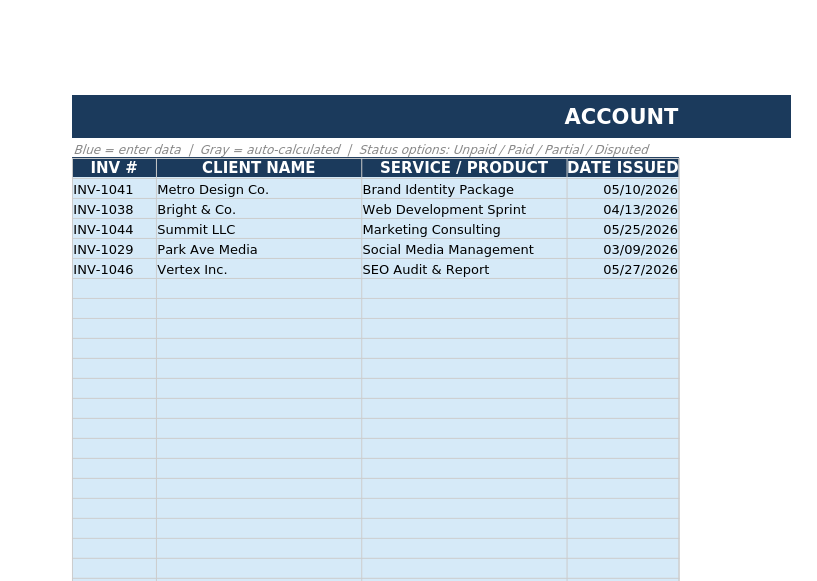
For businesses not ready to commit to full accounting software, a well-structured spreadsheet can accomplish nearly the same result with less overhead. The critical features to track are: invoice number, client name, invoice date, due date, amount, and current aging bucket.
A Tool Built for This Exact Problem
If you want to stop managing receivables in your inbox or across scattered spreadsheets, the Accounts Receivable Tracker template at tdniverse3.gumroad.com/l/bjjpne is worth the $15. It gives you a prebuilt aging report structure, a follow-up log, and a running total of what is current versus at risk, all in one place. It is the kind of tool that takes the system described in this article and makes it immediately usable, without building anything from scratch.
Common Mistakes in Small Business Accounts Receivable Management
Even business owners who understand the importance of collections make avoidable errors.
Sending invoices in batches at month-end artificially extends every payment cycle by weeks. Failing to confirm the right billing contact at a new client before invoicing often results in invoices sitting in the wrong inbox for 30 days. Skipping written contracts and relying on verbal agreements removes the legal foundation for any formal collection effort.
The most expensive mistake, though, is simply not tracking receivables at all. If you do not know what you are owed and how old each balance is, you cannot prioritize. And if you cannot prioritize, the 90-day invoices quietly become write-offs.
What the Template Looks Like
Here is a preview of the Accounts Receivable Tracker with sample data filled in:
The Bottom Line
Strong accounts receivable management is not about being aggressive with clients. It is about being organized, consistent, and clear from the first invoice to the last follow-up. Businesses that implement a defined collections sequence, monitor their aging reports monthly, and send invoices immediately after delivery collect faster and write off less. The math is straightforward: tighter collections mean more cash in the business, less reliance on credit, and a more accurate picture of what your company actually earns.